



Your doctor has mentioned angiography, and suddenly you are worried.
You may be thinking about the procedure, the risks, the cost, and what the result might show. Most importantly, you may be wondering, “Do I really need this test?”
That is a reasonable question.
An Angiography Treatment in Sir Ganga Ram Hospital can help determine whether coronary angiography is appropriate based on your symptoms, medical history, examination, and other test results.
Start With the Reason
Angiography is not simply a routine test that every patient with chest discomfort needs.
It is generally considered when a doctor needs clearer information about the blood vessels supplying the heart.
Depending on your situation, your doctor may first consider symptoms, an ECG, blood tests, echocardiography, stress testing, or other evaluations.
Common Concerns That Lead to Evaluation
A cardiology assessment may be considered if you have:
-
Repeated chest pressure or discomfort
-
Breathlessness during activity
-
Unexplained reduction in exercise capacity
-
Abnormal cardiac test results
-
Suspected coronary artery disease
-
Significant cardiovascular risk factors
-
Symptoms suggesting reduced blood flow to the heart
The decision about angiography should always be individualized.
What Does Angiography Show?
Coronary angiography helps doctors see the inside of the coronary arteries.
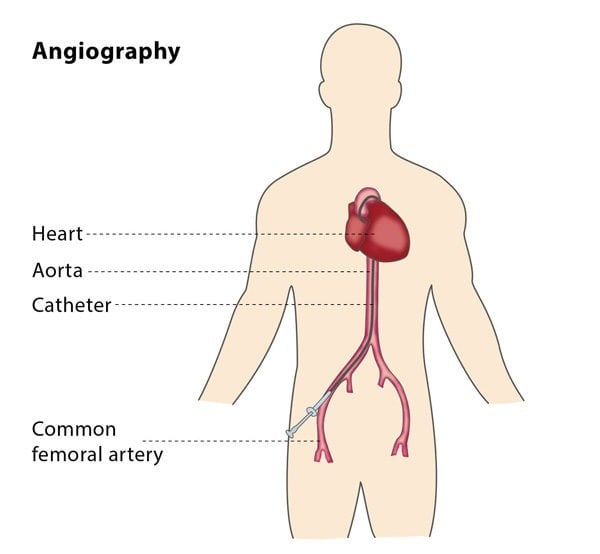
A thin catheter is guided through a blood vessel, and contrast material is used so the arteries can be seen on imaging.
The procedure can provide important information about whether arteries are narrowed or blocked and where the problem is located.
A Report Isn't a Treatment Plan
This is an important distinction.
A patient may receive an angiography report showing a narrowing and immediately assume that a stent is required.
But the report is only one part of the decision-making process.
Your cardiologist considers the narrowing alongside your symptoms, other test results, blood flow, medical history, and overall cardiovascular risk.
Main Cardiology Specialties
Heart care often involves different specialists depending on the problem.
Clinical Cardiology
A Clinical Cardiologist in Sir Ganga Ram Hospital can assess chest discomfort, breathlessness, blood pressure, cholesterol, palpitations, and other cardiovascular concerns.
Interventional Cardiology
An Interventional Cardiology Doctor in Sir Ganga Ram Hospital focuses on catheter-based procedures such as angiography and angioplasty for selected patients.
Cardiac Electrophysiology
A Cardiac Electrophysiologist in Sir Ganga Ram Hospital specializes in electrical problems and abnormal heart rhythms.
If your main concern is repeated palpitations or an irregular heartbeat, this may be a more relevant specialty than angiography.
Pacemaker Care
A Pacemaker Implant in Sir Ganga Ram Hospital evaluates patients with certain slow or unreliable heart rhythms who may benefit from pacemaker treatment.
Heart Specialist
A Heart in Sir Ganga Ram Hospital can provide broader cardiovascular assessment and help determine whether further specialist evaluation is required.
Here's the Contrarian Advice
One piece of common advice we would challenge is: “If your doctor mentions angiography, you should immediately assume something is seriously wrong.”
Not necessarily.
Doctors recommend investigations to answer specific clinical questions.
Angiography can be an important diagnostic tool, but its usefulness depends on the individual patient.
The right question is not simply, “Is angiography scary?”
It is, “What information will this test provide, and how will that information change my treatment?”
A Real-World Patient Example
Consider a patient in their early 60s who develops recurring chest discomfort while walking.
An initial assessment raises concern about possible coronary artery disease. Instead of relying only on the patient's description, the doctor reviews their risk factors and appropriate cardiac investigations.
When angiographic evaluation is considered necessary, the results can help clarify the condition of the coronary arteries and guide the next treatment decision.
The important point is that angiography should be part of a clinical decision, not an isolated event.
Does Angiography Automatically Mean Angioplasty?
No.
This is one of the most common misunderstandings we hear from patients.
Angiography is primarily a way of viewing the coronary arteries. Angioplasty is a treatment used to open certain narrowed or blocked arteries.
In some situations, intervention may be recommended after angiography. In others, medication, lifestyle management, or further evaluation may be more appropriate.
Your doctor should explain the findings and available options before treatment decisions are made.
What Should You Tell Your Doctor?
Before angiography, make sure your doctor knows about:
-
Current medicines
-
Previous heart procedures
-
Kidney problems
-
Diabetes
-
Blood pressure problems
-
Allergies or previous reactions to contrast material
-
Any previous bleeding problems
-
Other major health conditions
Do not stop medicines unless your medical team specifically tells you to.
Ask your doctor what preparation is required for your particular procedure.
Dr. Kavita Tyagi Cardiologist
Dr. Kavita Tyagi Cardiologist may evaluate patients with chest discomfort, breathlessness, suspected coronary artery disease, or abnormal cardiac test results. Based on the patient's history and clinical findings, a consultation can help determine whether additional cardiac investigations, including angiographic evaluation, may be appropriate.
Don't Let Fear Make the Decision
It is completely normal to feel nervous when you hear the word “angiography.”
But fear alone should not determine whether you accept or reject a recommended investigation.
Ask your cardiologist what they are looking for, what information the test could provide, what alternatives exist, and how the result might change your treatment.
That conversation can make the decision much clearer.
The Bigger Heart Health Picture
Angiography can answer an important question about coronary arteries, but it does not eliminate the need for long-term cardiovascular care.
Blood pressure, cholesterol, diabetes, smoking, physical activity, diet, weight, and family history still matter.
According to cardiovascular information reported by the World Health Organization in 2024, cardiovascular diseases remain the leading cause of death worldwide, causing an estimated 17.9 million deaths annually.
The practical takeaway is straightforward: investigating a suspected heart problem is important, but managing cardiovascular risk over the long term matters too.
Know the Emergency Signs
If you experience sudden severe chest pressure, serious difficulty breathing, fainting, or rapidly worsening symptoms, do not wait for a routine appointment.
Seek urgent medical care.
For recurring but non-emergency symptoms, arrange a cardiology assessment so the cause can be investigated properly.
FAQ
Why would a doctor recommend coronary angiography?
It may be recommended when a doctor needs detailed information about the coronary arteries, particularly when symptoms, test results, or clinical risk suggest possible coronary artery disease.
Is angiography painful?
Patients may experience some discomfort when the catheter is inserted or when local anaesthesia is given, but the procedure is generally performed with measures to keep discomfort manageable. Your medical team can explain exactly what you should expect.
Can angiography detect a blocked artery?
Yes. Coronary angiography can show narrowing or blockage in the coronary arteries and help doctors understand its location and extent.
Get the Answer Before Making the Decision
Hearing that you may need angiography can feel overwhelming.
Instead of searching for frightening stories online or making assumptions from someone else's experience, discuss your own symptoms and test results with a qualified specialist.
Consult an Angiography Treatment in Sir Ganga Ram Hospital to understand why angiography has been suggested and what the results could mean for your treatment.
Book a consultation with Dr. Kavita Tyagi to discuss your cardiac concerns and determine the appropriate next step for your heart health.
- Angiography Treatment in Ganga Ram Hospital
- Angiography Treatment in Rajendra Place
- Angiography Treatment in Patel Nagar
- Angiography Treatment in Central Delhi


